 Visualizer

Installing floor granite in a neat and sturdy manner requires special attention. Granite not only provides an elegant and modern look but also offers exceptional durability. However, to achieve the best results, the installation process must be done correctly.
This article will discuss the essential steps for proper floor granite installation, from tool preparation to finishing, to make your home's floor look perfect.
Correct Floor Granite Installation Steps
1. Prepare Tools and Materials
Before starting the installation of grout-free granite, the first thing to do is prepare all the necessary tools and materials. The equipment used is generally the same as what is used for regular floor installations. Some materials to prepare include cement, sand, water, and tools such as a trowel, rubber hammer, and others, depending on the specific needs of the job. Ensure all tools and materials are ready for use to ensure a smooth installation process.
2. Prepare the Cement Mixture
The cement mixture must have the right strength for the granite to adhere properly even without grout. The correct ratio of cement, sand, and water is crucial to ensure the ideal consistency. Make sure the cement mixture is thick enough when used for granite installation.
In addition to the traditional mixture, you can opt for ready-mix cement for more convenience. This mixture can be adjusted as needed, whether semi-wet or semi-dry. As a reference, the common ratio is 1 part sand to 3 parts cement, then adding a little water to create a thinner mixture. This process is an essential part of proper granite installation to ensure durability and strength.
3. Check the Condition of the Granite
Before starting the installation, it is important to check the condition of the granite. Ensure there are no damages such as cracks or scratches on the granite surface, as these can cause further damage during the installation process. Granite with cracks or scratches is at risk of breaking during installation, so this inspection is vital for ensuring optimal and durable installation results.
4. Create a Granite Pattern
In proper floor granite installation, creating a pattern is an important step that facilitates the installation process. Start by drawing a pattern from the center point of the room to make the granite installation more symmetrical. Then, for the sides or other areas, cut the granite according to the previously drawn pattern. This step ensures the granite installation looks neat and orderly, resulting in a more professional and aesthetic finish.
5. Apply the Cement Mixture
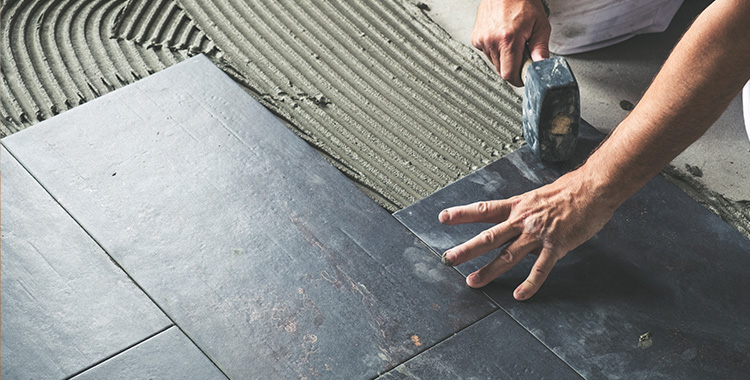
The next step in proper granite installation is to apply the cement mixture to the floor surface where the granite will be installed. Use a notched trowel to level the cement mixture, ensuring the thickness of the cement layer is adequate for the granite to bond well. When applying the cement mixture, ensure the notched end does not touch the floor to avoid creating voids beneath the granite. This is crucial to prevent the granite from becoming hollow or uneven, which could affect its durability and appearance.
6. Install the Granite
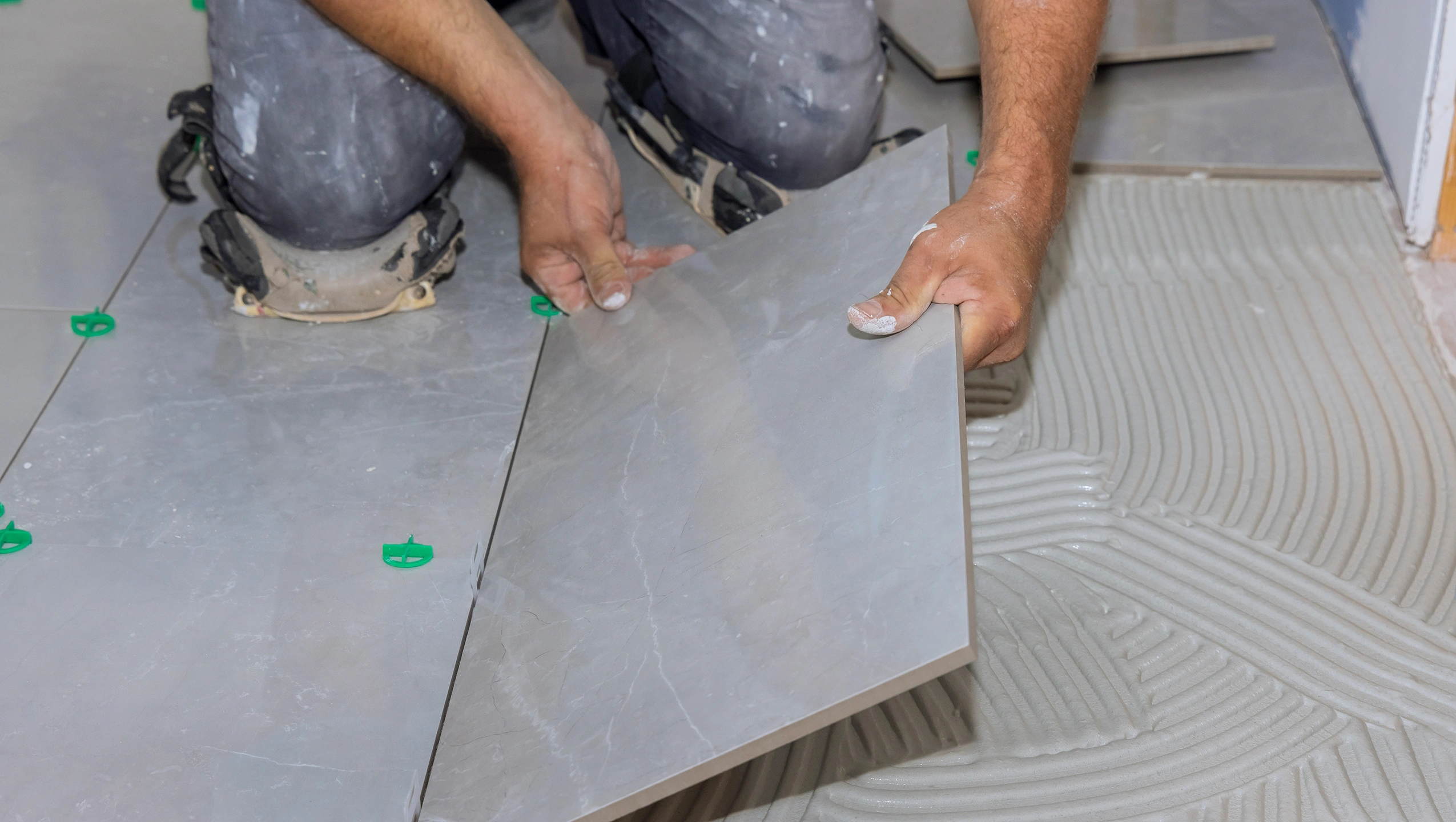
Once the previous steps are complete, the next step is to start placing the granite on the floor surface. Begin the installation vertically, then proceed horizontally. Ensure the granite is placed tightly with no gaps between each piece. The granite should be positioned in such a way that the joints are not visible.
To ensure an even and firm installation, use a rubber hammer and tap the granite gently to adjust its position with precision. The installation must be done carefully because rushing through it can result in poor adhesion.
After the granite is installed, test its firmness by tapping it with a spoon. If the sound is sharp, it means the granite is not solid and needs further compacting.
7. Finishing
Once the floor granite is installed, it's time for the finishing stage. Allow the granite to set for a while so the cement mixture can harden and bond strongly. Afterward, clean the surface of the granite from any remaining dirt or cement to ensure the granite remains clean and neat.
Plan Your Granite Tile Patterns Before Installation with MELIUZ Visualizer
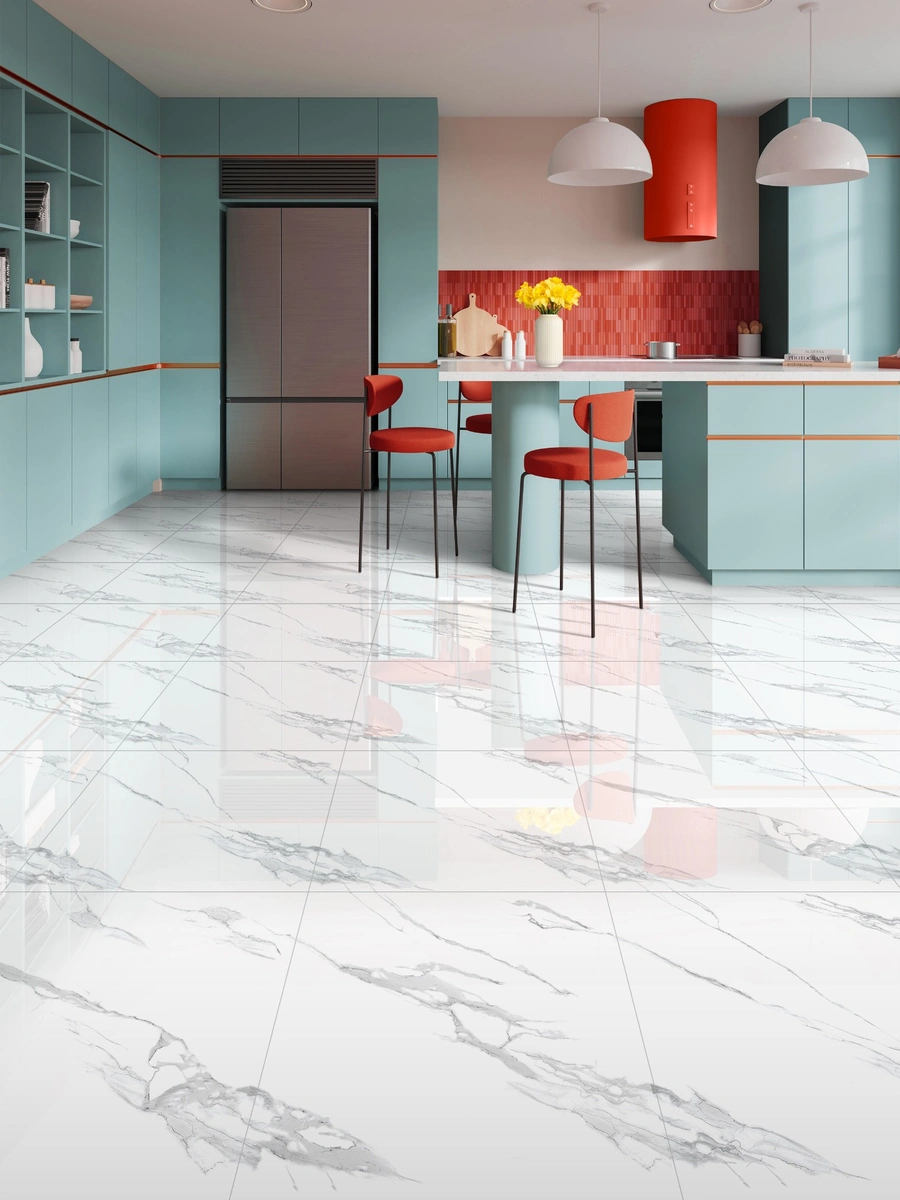
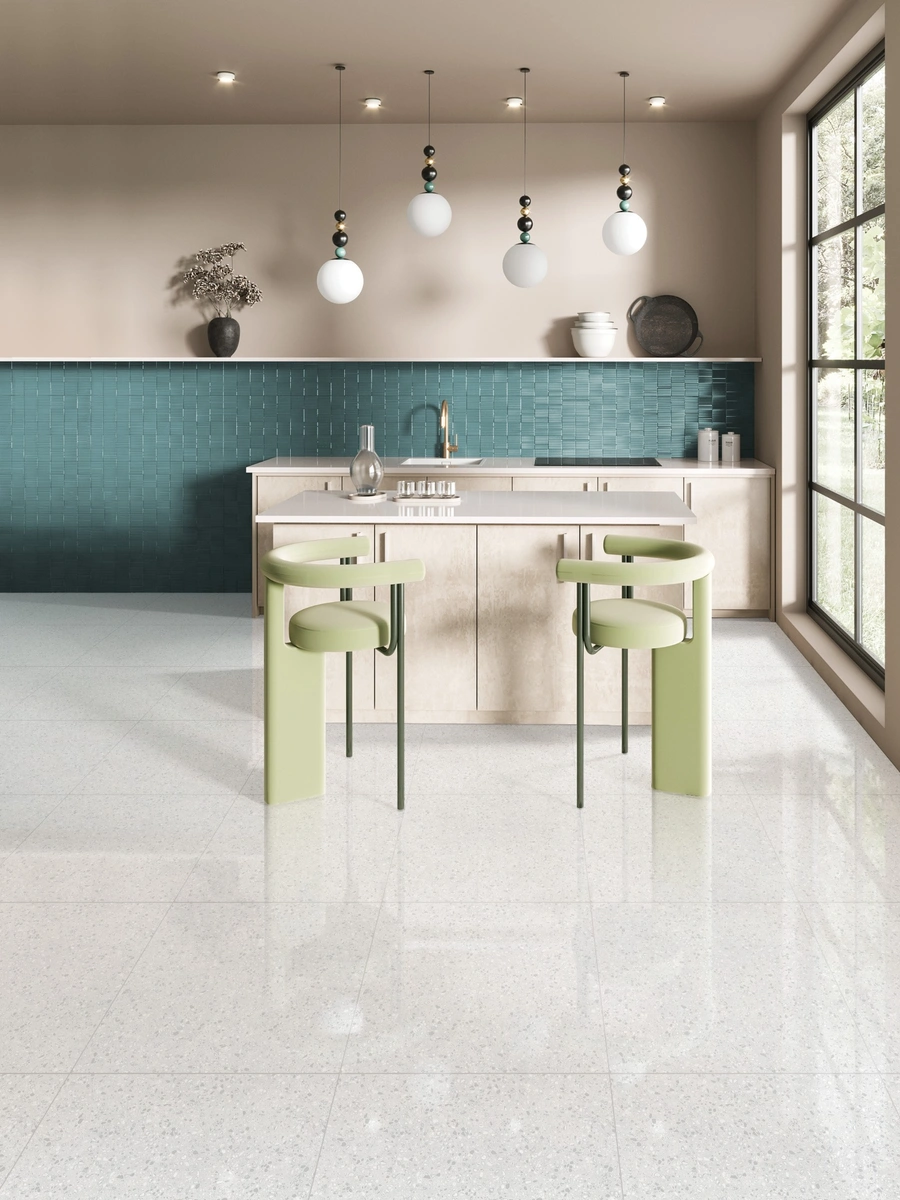
Before deciding on an installation pattern, you can preview different granite tile designs using the MELIUZ Visualizer.
Select a room type or upload a photo of your own space, then compare various patterns to get an initial impression of the flooring composition.
Once you have found a suitable product, examine physical samples and discuss the installation pattern with a professional installer.
You can also explore the MELIUZ Granite collection to compare tile sizes, patterns, colors, and surface finishes.
After selecting the product and determining the required quantity, use the MELIUZ Store Locator to find a nearby retailer. Confirm product availability before visiting through the available WhatsApp contact.
For installations covering large areas, wet spaces, outdoor environments, or projects with specific substrate conditions, consider hiring a professional installer experienced in tile installation systems. This helps ensure that adhesives, grout joints, movement joints, and installation techniques are appropriate for the project conditions.
FAQ
How Do You Install Granite Floor Tiles Properly?
Start by preparing a clean and level substrate, determining the installation layout, and applying adhesive using a notched trowel. Install the tiles gradually, maintain consistent joint spacing, and complete the grouting and finishing processes after the adhesive has reached the required curing time.
What Should You Prepare Before Installing Granite Floor Tiles?
Prepare granite tiles, suitable tile adhesive, a notched trowel, spirit level, tile spacers, rubber mallet, tile cutter, grout, and appropriate safety equipment. Also, ensure that the substrate is level, stable, and clean.
Can Granite Floor Tiles Be Installed Without Grout Joints?
It is best not to assume that a seamless appearance means tiles can be installed directly against one another. Joint spacing should be determined according to product specifications, grout requirements, substrate conditions, and installation methods.
What Is the Purpose of Back-Buttering When Installing Granite Tiles?
Back-buttering is the process of applying a layer of adhesive to the back of a tile to help achieve better mortar contact and coverage, particularly when installing large-format tiles or working under specific installation conditions.
Why Do Granite Tiles Sound Hollow After Installation?
Possible causes include insufficient adhesive coverage, an uneven substrate, improper mortar application techniques, adhesive exceeding its recommended open time, or inadequate contact between the adhesive and the back of the tile.
Should Granite Tile Installation Start from the Center of the Room?
Not necessarily. Starting from the center can help create a symmetrical layout, but the ideal starting point depends on the room's shape, doorways, focal points, installation pattern, and tile-cutting requirements.
How Long Should You Wait Before Walking on Newly Installed Granite Flooring?
There is no single waiting period that applies to every installation system. Follow the curing time recommended by the manufacturers of the tile adhesive and grout being used.
What Is the Purpose of Tile Spacers?
Tile spacers help maintain consistent gaps between individual tiles, resulting in more uniform and neatly aligned grout lines during installation.
How Do You Install Patterned Granite Tiles for a Neat and Consistent Appearance?
Perform a dry layout before installation, pay attention to the direction of the patterns, mix tiles from different boxes if necessary, and number the tiles according to their planned arrangement before permanently installing them.
How Do You Calculate Granite Tile Requirements Before Installation?
Measure the actual length and width of the installation area, determine the tile size and installation pattern, then use the MELIUZ Tile Calculator to estimate the required quantity of materials.
Product Popular

LAVANYA WHITE

Matt Vesuvio Charcoal

MATTEO GRIS